The Velvet Sofa Buyer's Guide for Edmonton Homes
Performance velvet, pile construction, colour under Edmonton winter light, and how to size a velvet set for the rooms we actually live in here.
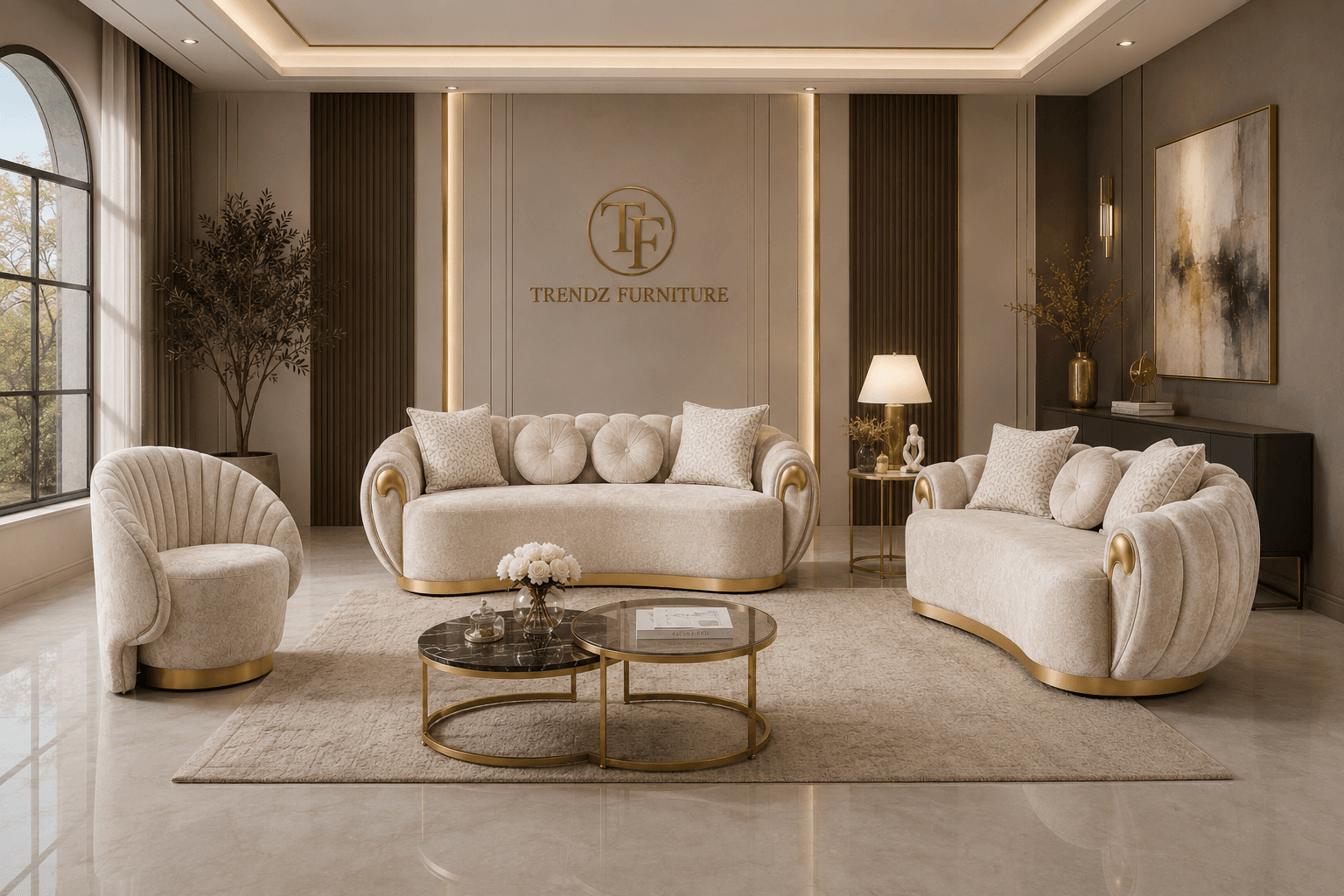
A velvet sofa is the piece people either fall for immediately or talk themselves out of. The hesitation is almost always the same three worries: it will stain, it will crush, and it will look dated in five years. All three are answerable, and the answers are more encouraging than most shoppers expect - particularly in Edmonton, where our dry winters are genuinely kinder to velvet than to leather.
This guide covers what actually matters when buying a velvet sofa for an Edmonton home: how the pile is constructed, why performance velvet behaves nothing like the velvet your grandmother owned, how colour reads under our low winter light, and how to size a set for the rooms we actually live in here. It is written from the floor of our west Edmonton showroom, where we keep velvet in almost every colour we sell.
Why velvet suits Edmonton homes specifically
Most sofa advice is written for a temperate climate. Ours is not one. Between November and March, indoor humidity in a heated Edmonton home routinely sits below thirty percent, and that dryness is what punishes leather - it draws moisture out of the hide until the surface stiffens and eventually checks.
Velvet does not have that failure mode. It is a woven textile, not a skin, so it neither dries out nor cracks. It also does not go cold to the touch. Sitting down on leather in February involves a few seconds of adjustment; velvet is at room temperature the moment you touch it. In a city where the living room is where you spend six months of the year, that difference is felt daily rather than theoretically.
The second reason is light. Edmonton gets genuinely low, raking winter sun, and velvet is the one upholstery that actively rewards it. The pile catches light at different angles, so a single-colour sofa reads as several tones across its surface. In a room lit by a low four o'clock sun, that depth is the difference between a sofa that looks flat and one that looks considered.
Performance velvet is a different material
The reputation velvet carries - delicate, stain-prone, precious - comes from traditional silk and cotton velvets. Almost nothing sold as an upholstery velvet today is made that way.
Modern performance velvet is a polyester pile, usually woven rather than tufted, with the fibres either solution-dyed or treated at the fibre stage rather than the surface. That distinction matters more than any marketing claim on a swatch tag. Solution-dyed fibre has colour throughout, so abrasion does not expose a pale core, and cleaning agents do not lift colour out of it.
Three specifications tell you what you are actually buying:
- Rub count (Martindale or Wyzenbeek) measures abrasion resistance. Anything rated for heavy domestic use will outlast normal family life on a sofa. Ask for the number rather than the adjective.
- Pile construction. A woven pile is anchored through the backing; a tufted or flocked pile is glued to it. Woven costs more and is the reason a good velvet still looks right after a decade.
- Cleanability code. Most performance velvets are water-cleanable, which means a spill can be blotted with water and a mild solution. Solvent-only codes exist and are worth knowing about before you buy, not after.
Our own velvet sofa sets are all performance textiles for exactly these reasons - a showroom in a family city cannot responsibly sell a sofa that fails on a spilled glass of wine.
The crushing question, answered honestly
Velvet does mark. This is the part most guides skate over, so here is the straight version.
When you sit on velvet, the pile lies down where the pressure was. That produces the shading people call crushing or pressure marks. On a good performance velvet this is temporary - the pile recovers, and a soft brush in the direction of the nap speeds it up. On a cheap flocked velvet, the fibres eventually stay flat and the marks become permanent.
There is also a permanent characteristic worth understanding before you buy rather than being surprised by later. Some velvets are made to develop what the trade calls patina - subtle directional shading across the seat that reads as character rather than wear. If you want a sofa that looks identical in year five, ask specifically for a velvet with high pile recovery. If you like the lived-in look, the patina is the point.
Either way, the maintenance is undemanding: vacuum the seat and crevices every couple of weeks with an upholstery head, brush the nap back in one direction, and blot spills immediately rather than rubbing them. That is the whole routine.
Choosing a colour for Edmonton light
Colour behaves differently here than it does in a showroom photograph shot under studio light, and differently again in January than in July.
Deep jewel tones - emerald, navy, teal, oxblood - are the classic velvet choice and the reason the material came back into fashion. They hold their depth under low winter light, where a flatter fabric in the same colour reads muddy. In a room with big north-facing windows, a jewel tone velvet is the piece that keeps the room from feeling grey for six months.
Warm neutrals - taupe, mushroom, camel, oyster - are the safer long-term buy and the ones we sell the most of. They photograph well, sit under almost any wall colour, and do not date the way a strong colour can. Our Havana in beige is the piece we point most Edmonton clients toward when they want velvet without committing to a statement colour.
Greys remain popular but are the hardest to get right. Cool greys can go flat and blue under LED lighting, especially at the cooler colour temperatures common in newer builds. If you want grey, look at it under a warm bulb before you decide - our Zoe in grey holds warmth better than most because the pile carries a slight brown undertone.
Black and charcoal velvet is the most underrated option in a dark-walled room. It reads as texture rather than a void, which flat black upholstery never manages. Our Mercedes velvet sofa is the piece that changes most people's mind about dark upholstery.
One practical rule: bring a cushion cover or swatch home and look at it at four in the afternoon in December. That is the hardest light your sofa will ever face.
Sizing a velvet set for an Edmonton room
Velvet sets are usually sold as three-piece configurations - sofa, loveseat, and accent chair - and the temptation is to take all three. Whether that works depends entirely on the room.
New builds in Windermere, Terwillegar and Callingwood typically have open-plan great rooms where the sofa is visible from the kitchen and entry. A full three-piece set works here, and because the pieces are seen from all sides, the curved silhouettes that velvet suits look better than a boxy sectional. Leave at least thirty-six inches of walking clearance on any side you travel, forty-two if the route is the main path through the room.
Established homes in Glenora, Highlands and Old Strathcona more often have a defined living room with a doorway rather than an opening. Here a sofa and a single accent chair usually beats a full set - the loveseat is what makes a smaller room feel crowded. Measure the doorway and any staircase turn before you commit, because velvet frames are often wider than they look.
Riverbend and Millwoods family homes sit between the two. If the room is the everyday room rather than a formal one, prioritise seat depth over piece count. A deeper sofa with two seats used constantly beats three pieces nobody sits in.
Downtown lofts and Grovenor infills are the small-footprint case. A loveseat plus two accent chairs almost always reads better than a full sofa, and it gives you the flexibility to rearrange - which matters more in a room that has to do several jobs.
Living with velvet, honestly
A few realities worth knowing before you buy, none of them deal-breakers.
Pet hair is more visible on velvet than on a textured weave, though it also lifts off more easily with a rubber brush or a lint roller. If you have a heavy-shedding dog, choose a colour close to the coat rather than fighting it.
Claws are the real risk. A woven pile resists snagging far better than a looped fabric, but a determined cat can still pull threads. If cats are part of the household, ask us specifically for the tightest-woven velvets on the floor.
Direct sunlight fades velvet the way it fades everything. If the sofa will sit in a south-facing window, expect some shift over years and rotate the cushions occasionally to keep it even.
And velvet holds warmth, which is a genuine advantage for nine months of the year in Edmonton and a mild disadvantage during a July heat wave in an upper-floor room without air conditioning.
What a velvet set costs to own
Rather than a price, think about cost per year of use, because that is where velvet does well.
A performance velvet sofa with a woven pile and a kiln-dried hardwood frame is a ten-year piece and often longer. The frame outlives the fabric in almost every case, which means a reupholstery in year twelve is a real option rather than a theoretical one - and reupholstering a good frame costs a fraction of replacing the sofa.
The pieces that do not last are the ones built on softwood or engineered frames with flocked fabric. They look identical in a photograph and diverge completely by year three. When you are comparing two velvet sofas at different prices, the frame and the pile construction are almost always where the difference sits, not the appearance.
Ask what the frame is made of and how the pile is constructed. Any showroom worth buying from will answer both without hedging.
What is inside the cushions matters as much as the velvet
Two velvet sofas with identical fabric can feel completely different after a year, and the reason is almost always the cushion fill rather than the upholstery.
High-resilience foam is the workhorse. It holds its shape, needs no maintenance, and is what most well-built sofas use in the seat. Look for a density rating rather than a description; low-density foam is the single most common reason a sofa feels tired within two years.
Down-blend over a foam core gives the softer, slightly rumpled look that suits velvet particularly well. It is more comfortable to sink into but requires plucking and rotating every few weeks to keep its shape. If nobody in the household will do that, it will look permanently flattened and the sofa will get blamed for it.
Pocket-coil seats sit under the foam in better-built pieces and are the reason some sofas still feel supportive in year eight. They distribute weight rather than compressing in the spots people habitually sit.
Back cushions matter less structurally but a great deal for comfort. Fixed backs hold a cleaner line and need no upkeep; loose back cushions are more comfortable and more forgiving of different heights, but need the same occasional fluffing as down seats. Ask which you are getting, because from a photograph they are indistinguishable.
A short buying checklist
- Confirm the pile is woven, not flocked or glued.
- Ask for the rub count, not just the words heavy duty.
- Check the cleaning code - water-cleanable is easier to live with.
- Look at the colour under warm light and late-afternoon daylight, not showroom spots.
- Measure the doorway and stair turn, not only the room.
- Decide between three pieces or two based on the room, not the deal.
- Ask what the frame is made of.
Come see velvet in person
Velvet is the one upholstery that genuinely cannot be judged from a screen. The whole appeal is how the pile moves under light, and a photograph flattens exactly that. A colour that looks flat online is often the one that looks best in the room, and the reverse happens just as often.
Come see the full range at our showroom at 14721 123 Ave NW in west Edmonton. Sit on them, run a hand against the nap, and see how each colour behaves as the afternoon light drops. Browse the velvet sofa sets or the wider living room collection first if you want to narrow things down, arrange flexible financing in person, or get in touch with a question. White-glove delivery covers Edmonton and Alberta, starting at $199 outside Edmonton.
Considering leather instead? Our guide to caring for leather furniture through prairie winters covers the trade-off in detail.
FAQ
Is a velvet sofa practical for a family with kids and pets?
Yes, provided it is a performance velvet with a woven pile. Modern polyester velvets are water-cleanable and rated for heavy domestic use, so spills blot out and daily wear does not thin the fabric. The honest caveats are that pet hair shows more than on a textured weave, though it lifts off easily, and that cats can pull threads on a looser weave. Ask for the tightest-woven options if cats are part of the household.
Does velvet crush or leave permanent marks?
Sitting flattens the pile and creates shading, which is normal and usually temporary on a quality velvet - brushing the nap in one direction restores it. Permanent flattening is a symptom of a cheap flocked pile where the fibres are glued rather than woven. Some velvets are deliberately made to develop soft directional patina over years, so if you want an unchanged appearance, ask specifically for a high pile-recovery velvet before you buy.
How do I clean a velvet sofa?
Vacuum the seats and crevices every couple of weeks with an upholstery attachment, and brush the pile in a single direction to keep the nap even. Blot spills immediately with a clean cloth rather than rubbing, which pushes liquid into the pile. Check the cleaning code on your specific fabric first - most performance velvets are water-cleanable, but solvent-only codes exist and using the wrong product can leave a ring.
Which velvet colour works best in an Edmonton home?
Warm neutrals like taupe, camel and oyster are the safest long-term choice and suit almost any wall colour. Deep jewel tones such as emerald, navy and oxblood hold their richness under low winter light, where flatter fabrics look muddy. Cool greys are the hardest to get right because they can go blue under cooler LED bulbs, so always view grey under a warm bulb before deciding.
Do you sell velvet sofas in Edmonton?
Yes. Trendz Furniture at 14721 123 Ave NW in west Edmonton carries a full range of velvet sofa sets in sofa, loveseat and accent chair configurations across neutrals, jewel tones and darks. Everything is on the floor to sit on and compare under real light, which matters more with velvet than with any other upholstery.
Can a velvet sofa be reupholstered later?
Yes, and it is often worth doing. On a well-built sofa the kiln-dried hardwood frame outlasts the fabric, so reupholstering in year ten or twelve costs considerably less than replacing the piece and keeps a frame you already know is comfortable. This is only true of quality frames - softwood or engineered frames are generally not worth recovering.


